
Complexity & Society Lab

Welcome to the Complexity & Society Lab (“&-Lab”) at Northeastern University’s Network Science Institute. We develop methods for modeling multi-scale and dynamic networks—spanning graph comparison, inference, and machine learning—and apply them to domains such as urban systems, criminal justice, public health, neuroscience, and sports analytics. By combining information theory, Bayesian inference, and complex-systems science with large-scale data, we try to uncover mechanisms that drive collective behavior and emergence, ultimately informing interventions that build more resilient and equitable social systems.
Directed by Professor Brennan Klein: an Assistant Professor in the Departments of Communication Studies and Physics at Northeastern University, and core faculty at the Network Science Institute, where he directs the Complexity & Society Lab. His research is focused on two broad areas: 1) Information, emergence, and communication in complex systems: developing tools and theory for characterizing dynamics, structure, and scale in networks, and 2) Data justice: drawing on complex systems science to document—and fight against—emergent or systemic disparities in society, especially as they relate to the U.S. criminal-legal system. Prof. Klein is also the director of NetSI Sport, an interdisciplinary research group studying team coordination, performance, and networks in elite sports. In 2023, Prof. Klein was awarded the René Thom Young Researcher Award, given to a researcher to recognize substantial early career contributions and leadership in research in Complex Systems-related fields. Prof. Klein is the Data for Justice Fellow at the Institute on Policing, Incarceration & Public Safety at Harvard University's Hutchins Center for African & African American Research. He received a PhD in Network Science in 2020 from Northeastern University and earned his BA in Cognitive Science & Psychology from Swarthmore College in 2014.
Research Areas
Networks, information, and inference.
Tools and theory for characterizing structure, dynamics, and scale in complex networks. We work on coarse-graining/causal emergence, network reconstruction/inference, and principled ways to compare networks and identify the scale at which a system is best described. These methods are domain-general, and a broad goal is to carry them into applied problems across a range of disciplines.
Data and justice.
We use network science and complex-systems methods to study how public institutions shape fairness, opportunity, and public safety. Currently, our focus is on building the Atlas of Municipal Courts—mapping the thousands of city-run courts that handle much of the country's low-level enforcement—and examining the effects of drug-free-zone laws, pairing large-scale administrative data with statistical modeling and data visualization.
Sports and collective behavior.
Through NetSI Sport, we study how teams coordinate, communicate, and produce collective behavior across a range of sports. Our primary projects model matches as networks of interacting players—identifying passing and pressing structures, tactical vocabularies, and the coordination dynamics that distinguish teams—using event and tracking data from elite soccer.
Networks across society, health, and the brain.
Lab members also work across a broader set of systems: segregation and mobility in cities, public health and disease modeling, information access and inequality on networks, the dynamics of neuronal systems, and how processes spread through social and biological networks. The overarching themes that connect them center around how structure shapes function across scales.
Lab Members

Maddalena Torricelli, Postdoctoral Researcher (Sports Analytics)
Maddalena Torricelli is a postdoctoral researcher specializing in sports analytics, applying network science, data analytics, and complex-systems methods to team dynamics, performance, and tactical patterns in elite sport. She holds a PhD in Data Science and Computation from the University of Bologna, with a focus in complex-systems physics and computational social science; her earlier research spanned temporal networks, dynamic-process modeling, and polarization and misinformation, particularly around climate change and natural disasters. A central figure in NetSI Sport, she leads work on the structure and evolution of team play—including a recent study of how spatial structure, passing networks, and gameplay intensity have shifted across elite women's and men's football over recent years—and mentors several junior scholars in sports analytics. Her network analyses of soccer have been featured in popular media, including World Cup coverage, public lectures, and more. Website: https://maddalenatorricelli.me/.
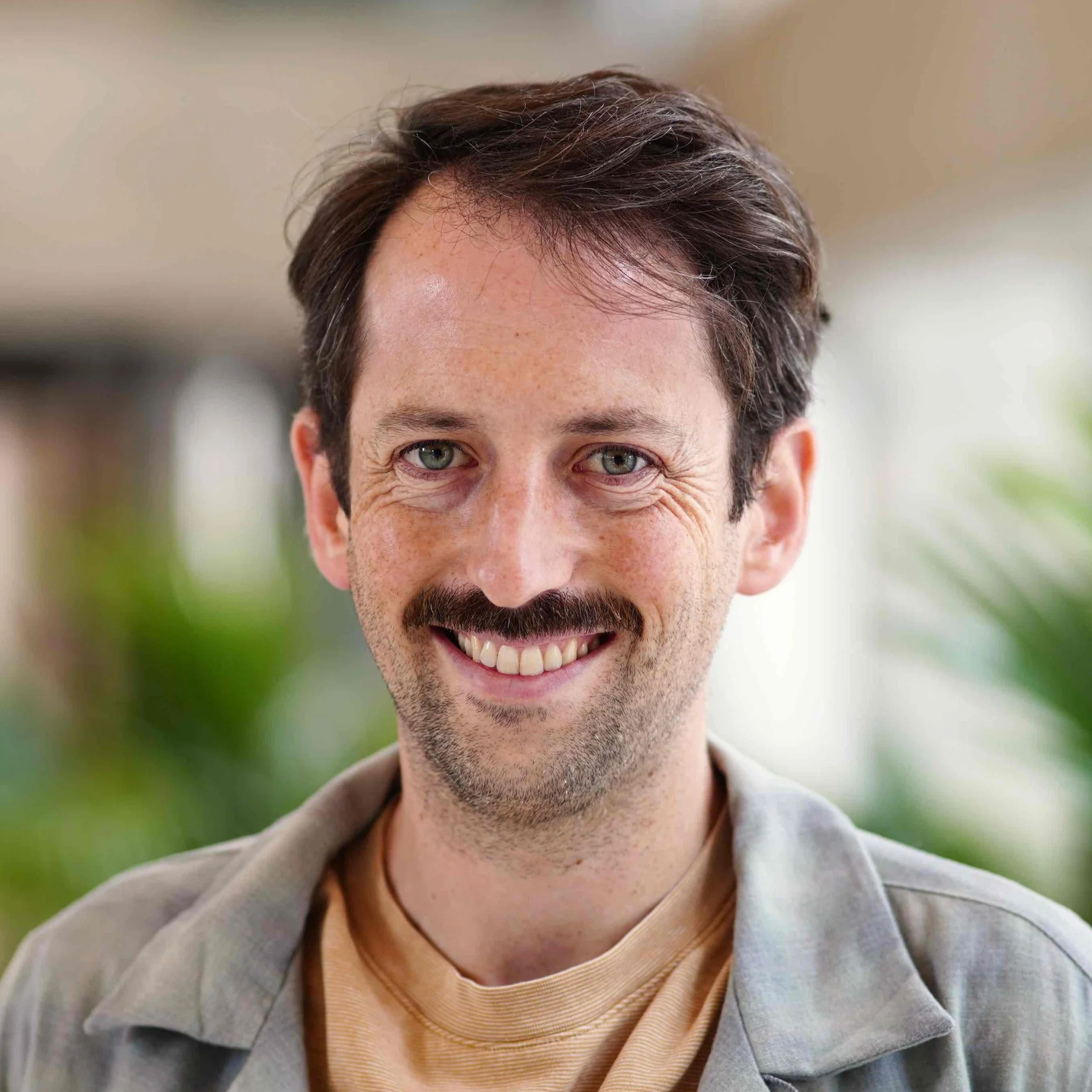
Isaac Dalke, Postdoctoral Researcher (Data Justice)
Isaac Dalke is a political sociologist studying the intersection of public safety, bureaucracy, and social policy using computational and qualitative methods, from how the state organizes responses to violence, to the political possibilities of nonprofits, to the idiosyncrasies of local governance in the U.S. In the &-Lab, he leads the creation of the Atlas of Municipal Courts, a project to collect and openly publish data on every municipal court in the country—city-run courts that handle a wide range of sub-felony enforcement, which have drawn scrutiny as revenue engines for cities (e.g. Ferguson, Missouri). His broader work examines community-based violence prevention, parole-board decision-making, and the moral logics of punishment, with papers in Punishment & Society, Law & Social Inquiry, Theory and Society, and Theoretical Criminology. He holds a joint appointment with Harvard's Institute on Policing, Incarceration & Public Safety, where he is also a fellow in the Department of Sociology. He received his PhD in Sociology from the University of California, Berkeley in 2025. Website: https://isaacdalke.github.io/.

Moritz Laber, PhD Student (Network Science)
Moritz Laber is a 5th year PhD student in Network Science at Northeastern University. He is broadly interested in the mutual influence of network structure and dynamics. Currently, he is using methods from information theory to identify structure at different scales in complex systems. Before joining NetSI, Moritz studied how supply shocks propagate on the global food production network. He received a BS and MS in Physics from Karlsruhe Institute of Technology and a MS in Computational Science from University of Vienna. Website: https://moritz-laber.github.io/.

Erik Weis, PhD Student (Network Science)
Erik Weis is a 3rd year PhD student in Network Science at Northeastern University. His interests involve using complex systems modeling to improve the design of policy interventions. His past research has explored the impact of uncertainty on the design of optimal network interventions. Before joining NetSI, Erik received a MS in Complex Systems and Data Science from the University of Vermont and a BA in Physics from Dartmouth College. Website: https://erikweis.com/.

Lochan Chaudhari, PhD Student (Network Science)
Lochan Chaudhari is a 3rd year PhD student in Network Science at Northeastern University. Her research interests lie in applying tools from complex systems and statistical physics to explore the complexities of biological systems, with a particular emphasis on neuronal systems. Previously, Lochan studied the dynamics of coupled neurons, their networks, and their interactions with astrocytes. Lochan received a BS-MS in Physics from the Indian Institute of Science Education and Research in Tirupati. Website: https://www.networkscienceinstitute.org/people/lochan-chaudhari.
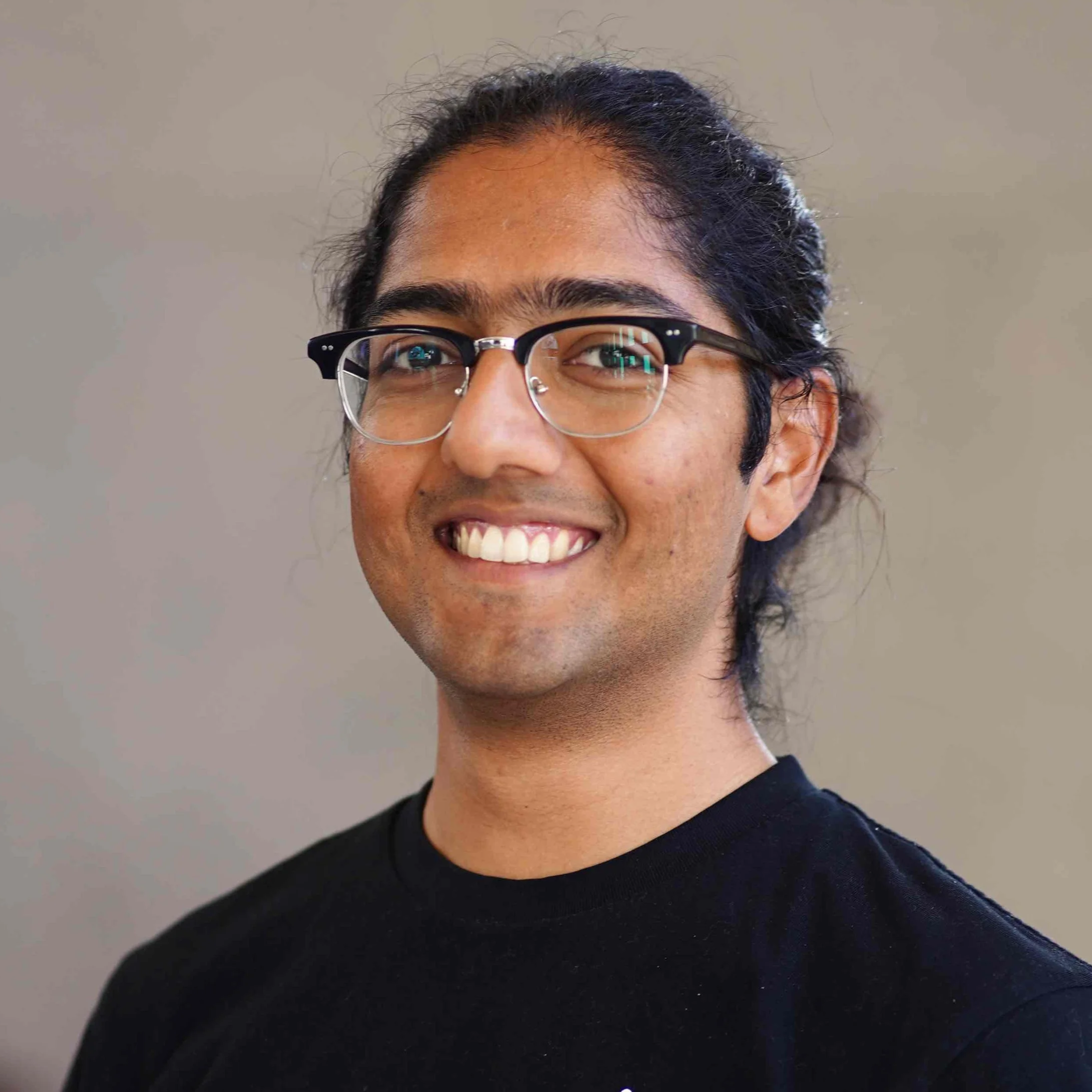
Chethan Kavaraganahalli Prasanna, PhD student (Network Science)
Chethan Kavaraganahalli Prasanna is a 2nd year PhD student in Network Science at Northeastern University. His research interests center around foundational network theory, collective behavior, and inference in complex systems. Chethan completed his MS in Computer Science at the University of Colorado Boulder, focusing on theoretical and computational approaches to network dynamics and collective phenomena. Website: https://www.networkscienceinstitute.org/people/chethan-kavaraganahalli-prasanna.
Affiliate & Visiting Members

Will Landecker, Affiliate Scientist
Will Landecker is a data scientist and researcher and is the chief scientist at Tech Integrity Lab, a nonprofit project that ensures public institutions apply advanced technologies fairly and accurately. He holds a PhD in computer science from Portland State University (dissertation advised by Melanie Mitchell) and a Bachelor's degree in mathematics from Reed College. His research focuses on interpretable machine learning, algorithmic bias, and measuring algorithm performance in high-stakes, high-consequence settings. Dr. Landecker spent ten years at tech companies (Twitter, Lyft, Stripe, Nextdoor) building and evaluating algorithms for accuracy, safety, transparency, and bias. He teaches in both academia and industry about the subtle and often unintentional ways that algorithms and their evaluations can mislead users. His work includes the measurement and remediation of misbehaving or misaligned algorithmic systems through both technical and policy decisions. Website: https://www.accountablealgorithm.com/.
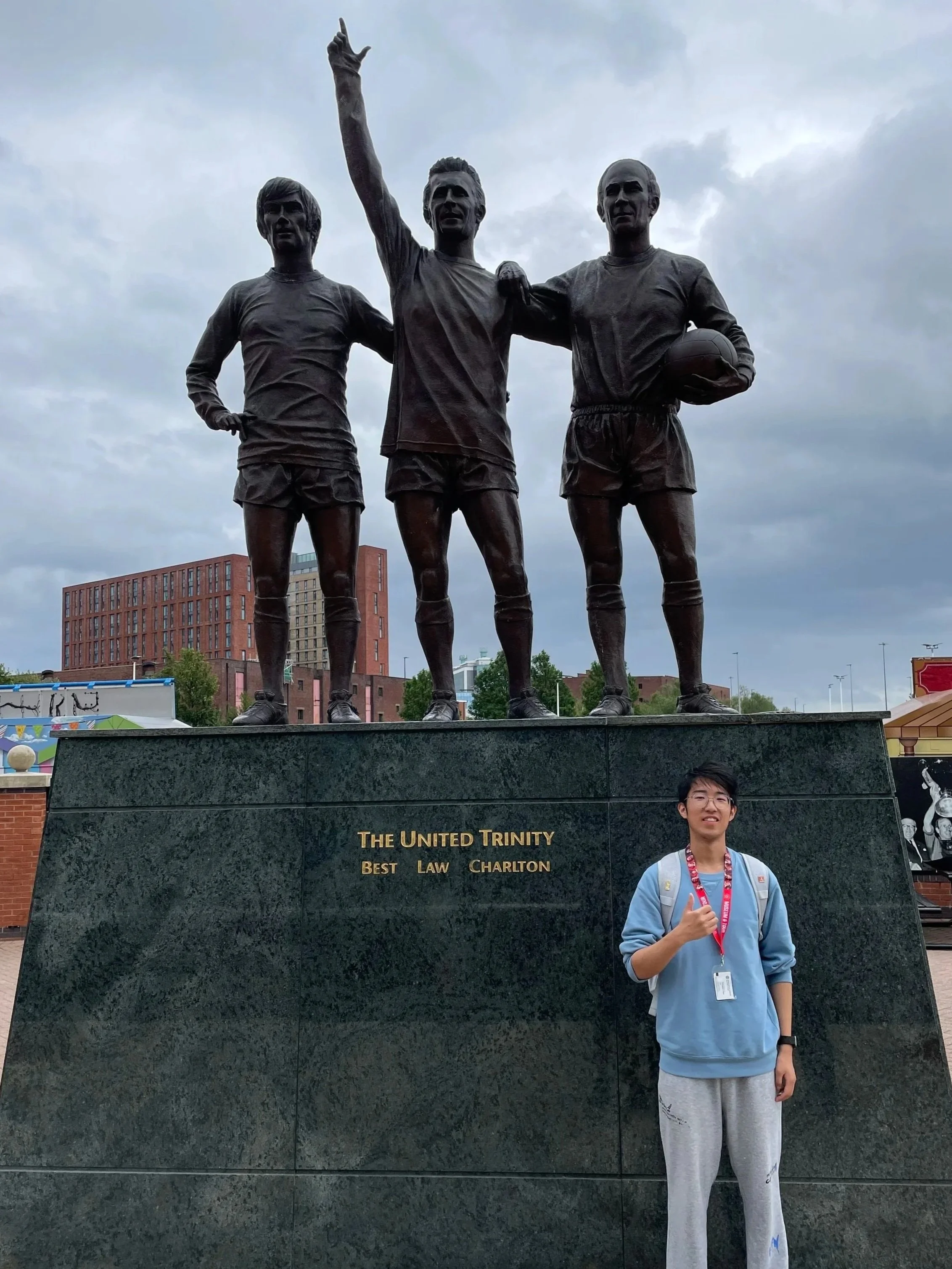
Youcheng Song, Visiting Researcher
Youcheng Song is a visiting summer researcher in the NetSI Sport group. He is developing graph-based models of how pressing sequences evolve over time, using spatial event data to characterize the quality of collective pressing and predict how each press resolves. He is an MS student in Statistics at the University of Illinois Urbana-Champaign and holds a double degree in Economics and Mathematics from the Toulouse School of Economics. He also writes publicly on soccer analytics and tactical data visualization. Website: https://www.linkedin.com/in/youcheng-song-725718269/.
Benedek Zentai, Visiting Researcher (Sept. 2026)
Benedek Zentai is a Fulbright Visiting Student Researcher, joining the lab in September 2026. He is an MSc student in Computer Science Engineering at the Budapest University of Technology and Economics, where his research applies machine learning to elite sports performance — including published work on performance analysis and boat-speed prediction in SailGP professional sailing. In NetSI Sport, he will work on sports-analytics projects at the intersection of network science and machine learning. His technical interests span deep learning and reinforcement learning, and he is also a competitive sailing coach. Website: https://www.linkedin.com/in/benedek-zentai-72554729b/.
Lab Alumni

Eline Bouwmeesters
Visiting MS Student (AccelNet-MultiNet Fellow, ‘24)
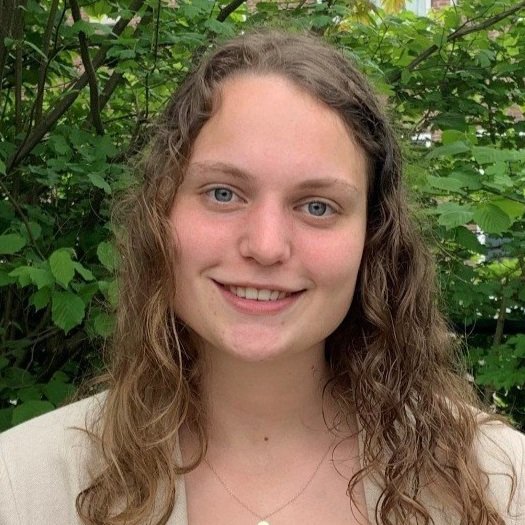
Janne de Rooij
Visiting MS Student (AccelNet-MultiNet Fellow, ‘24)


News & Lab Updates
November 13, 2026 — Brennan Klein and Maddalena Torricelli to attend Hudl Performance Insights annual conference in London, UK.
October 9-16, 2026 — CCS 2026 in Binghamton, New York.
October 10, 2026: Brennan Klein speaking at a pre-conference event for the Young Researchers of the Complex Systems Society on a “CV of Failures” panel.
July 28-31, 2026 — IC2S2 2026 in Burlington, Vermont. &-Lab work presented (italics=presenter):
Flows in Networks of Criminal-Legal Institutions and the Spatial Interdependence of Criminalization. Dalke, I. & Klein, B. (talk)
Mixing Patterns in Higher-Order Networks: A Review. Laber, M. & Klein, B. (talk)
Money does not buy time: Time-richness predicts ability to access and allocate time across urban life. Rosen, J., Weis, E., Gibbs, H., Sanchez, S., Yabe, T., Klein, B., O'Brien, D., & Moro, E. (talk)
July 15, 2026 — Announcing a special issue of npj Complexity on Complexity and Sports. Submission deadline: April 16, 2027. Editors: Brandon Ogbunu, James Holehouse, Brennan Klein, Maddalena Torricelli & Laurent Hébert-Dufresne.
July 2026 — Brennan Klein joins the Board of the Network Science Society.
July 1, 2026 — Brennan Klein promoted to tenure-track role, as Assistant Professor in the Department of Communication Studies with a joint appointment in the Department of Physics.
June 29 - July 1, 2026 — Chethan Kavaraganahalli Prasanna presents at the 2026 International Conference on the Science of Science and Innovation (ICSSI) in Boulder, Colorado.
June 22-26, 2026 — Lochan Chaudhari and Chethan Kavaraganahalli Prasanna participating in the Complexity 72h workshop.
June 9 - July 1, 2026 — Erik Weis participating in the Santa Fe Institute Complex Systems Summer School.
June 9-12, 2026 — Lochan Chaudhari presents at the International Conference on the Mathematics of Neuroscience and AI in Rome, Italy.
June 8, 2026 — Invited talk, Statistics for Forensics and Lawyers at the National Forensic College (Cardozo Law School), with Prof. Sam Zhang (University of Vermont).
June 1-5, 2026 — NetSci 2026 in Boston, Massachusetts, where Brennan Klein served as conference chair. &-Lab work presented (italics=presenter):
A Guide to Higher-Order Homophily. Laber, M. & Klein, B. (talk)
NetPair: Structural motifs for physical network distance. Brennan, D., Rogers, T., Worden, K., & Klein, B. (talk)
Money does not buy time: Time-richness predicts ability to access and allocate time across urban life. Rosen, J., Weis, E., Gibbs, H., Sanchez, S., Yabe, T., Klein, B., O'Brien, D., & Moro, E. (talk)
Hierarchy and scarcity: How territory quality and environmental variability shape a social network of dispersal. Swain, A., Klein, B., Kawakatsu, M., Barve, S., Koenig, W., & Walters, E. (talk)
Compressibility of Neuronal Activity Across Dynamical Regimes. Chaudhari, L. & Klein, B. (poster and satellite talk)
The Impact of Network Structure and Prior Assumptions on Network Reconstructability. Glover, C., Weis, E., Kumar, S., Ehlert, J., & Klein, B. (poster)
May 15, 2026 — Welcoming Youcheng Song, visiting student in sports analytics.
March 5, 2026 — Brennan Klein gives a public lecture on data and justice in the criminal-legal system: Lectures on Tap at Democracy Brewing in Boston.
December 10-12, 2025 — Brennan Klein participating in Towards a Data-Driven Science of Stories workshop at the Santa Fe Institute.
December 9, 2025 — Brennan Klein leading tutorial session at Complex Networks 2025.
October 23-24, 2025 — Brennan Klein and Isaac Dalke presenting in a plenary session at Municipal Courts and the Promise of Community Justice at Rutgers University.
September 22-24, 2025 — Brennan Klein attending the Santa Fe Institute working group on AI in the Criminal Justice System.
July 21-24, 2025 — IC2S2 2025 in Norrköping, Sweden. &-Lab work presented (italics=presenter):
Regionalization via nonparametric community detection in spatially embedded networks. Weis, E., Laber, M., Kirkley, A., & Klein, B. (talk)
The temporal dimension of experienced segregation in cities. Rosen, J., Weis, E., Gibbs, H., Yabe, T., Klein, B., O’Brien, D., Moro, E. (talk)
June 23-27, 2025 — Maddalena Torricelli and Brennan Klein attend Complexity72h as tutors, alongside Prof. Javier Buldú, on the project, Harder, shorter, sharper, forward: A comparison of women's and men's elite football gameplay (2020-2025).
June 8 - July 4, 2025 — Moritz Laber participating in the Santa Fe Institute Complex Systems Summer School.
June 1-5, 2025 — NetSci 2025 in Maastricht, The Netherlands. (italics=presenter)
Generalization and efficiency of graph neural ODEs for network dynamical systems. Laber, M. & Klein, B. (talk)
Regionalization via nonparametric community detection in spatially embedded networks. Weis, E., Laber, M., Kirkley, A., & Klein, B. (talk)
Modeling institutional prestige through inter-university collaboration networks. Chaudhari, L., Dorantes-Gilardi, R., & Klein, B. (poster)
Higher-order network effects on information access equality and efficiency. Laber, M., Dies, S., Ehlert, J., Klein, B., & Eliassi-Rad, T. (talk)
A comparison of network sampling techniques that preserve local structure. Bouwmeesters, E., van der Hoorn, P., & Klein, B. (talk)
Growing unlabeled networks. Hartle, H., Klein, B., Krapivsky, P., & Krioukov, D. (poster)
A review of coarse-graining methods: Insights from physics, network science, and computer science. Aleta, A., Boucherie, L., Chaudhari, L., Arribas, A., Fernández da Silva, M., Ferri, I., Fosch, A., Freitas, V., Hartle, H., Klein, B., Urbinati, A., Weis, E., Venturini, S. (poster)
Information loss in models of communication across populations. Kumar, S., Laber, M., Majumder, M., Foucault Welles, B. (poster)
April 24, 2025 — Erik Weis receives prestigious NSF NRT PEAR Traineeship.
April 1, 2025 — Maddalena Torricelli joins the lab as a postdoctoral researcher, focusing on NetSI Sport—a new initiative in sports analytics at the Network Science Institute.
March 3-5, 2025 — NSF AccelNet-MultiNet Collabathon at Northeastern University.
January 2025 — &-Lab work featured in the "What Connects You?" exhibition at the Museum of Science, Boston.
January 1, 2025 — Brennan Klein promoted to core faculty at the Network Science Institute, Assistant Teaching Professor in the Department of Physics, and director of the MS Program in Complex Network Analysis.
Misc.
November 19, 2024 - Slides from invited talk at the Mathematical Institute at the University of Oxford: Network Comparison and Graph Distances: A Primer and Open Questions.
October 22, 2024 - Slides from invited talk at the Santa Fe Institute: Simple Injustice, Complex System: Data and inequalities of policing, sentencing, and incarceration in the U.S.
March 13, 2024 - Slides from &-Lab Introduction presentation.